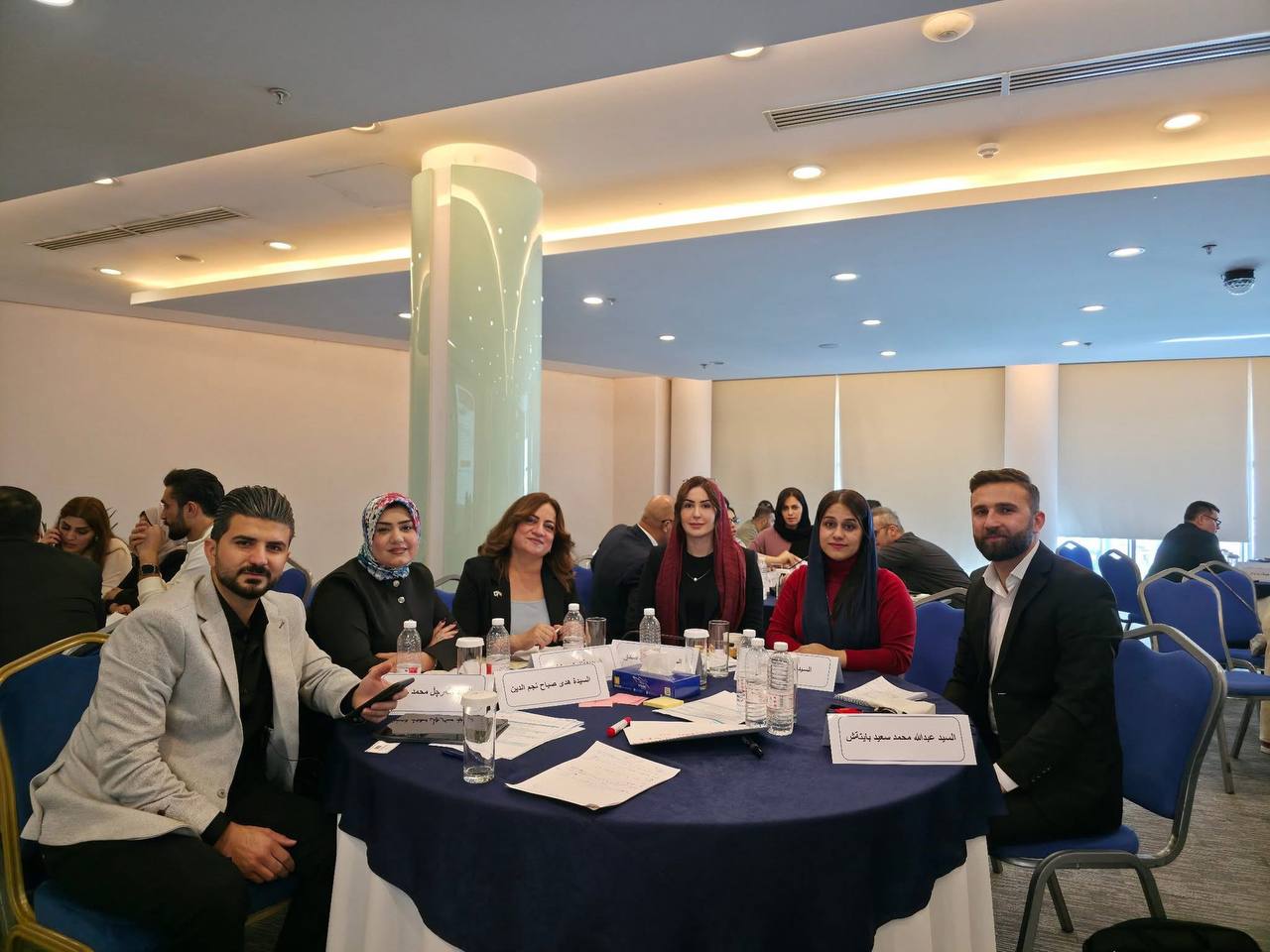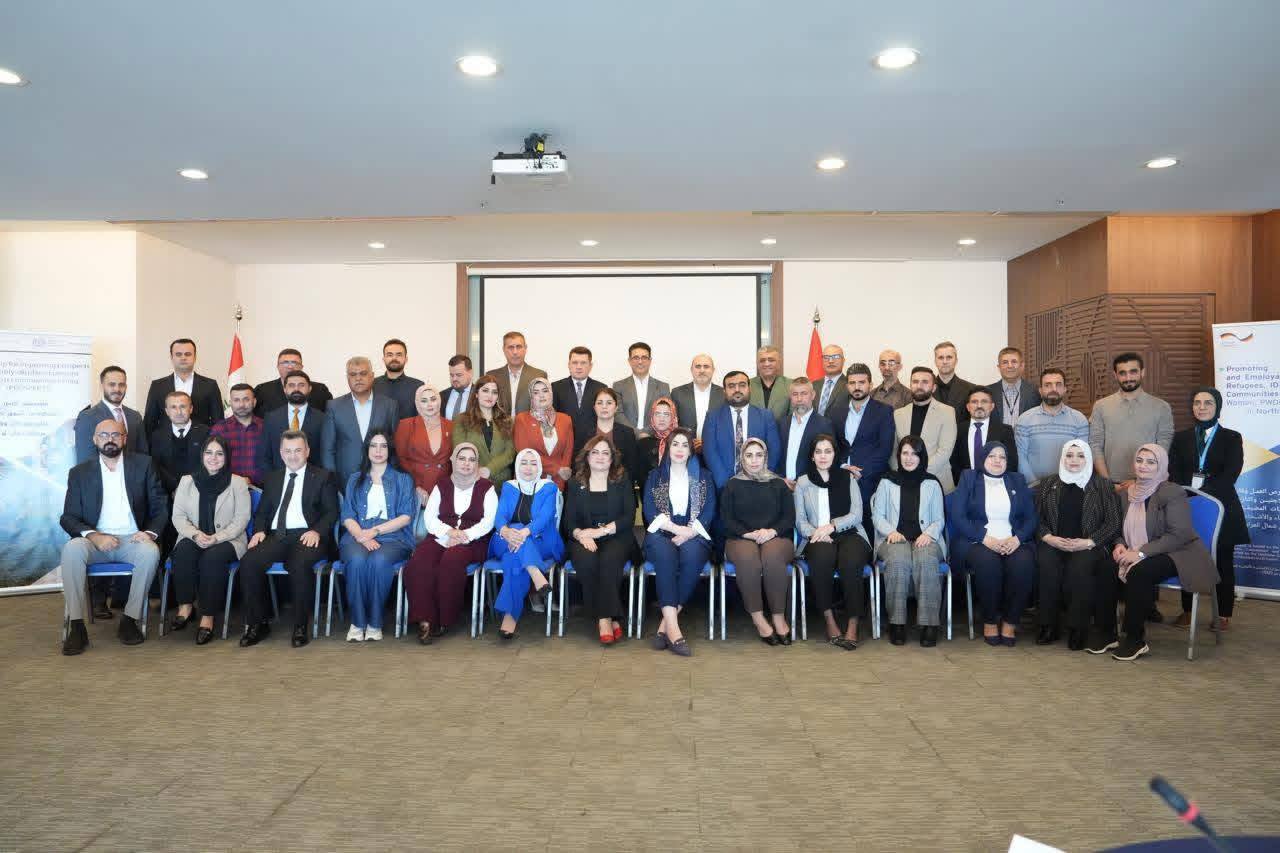
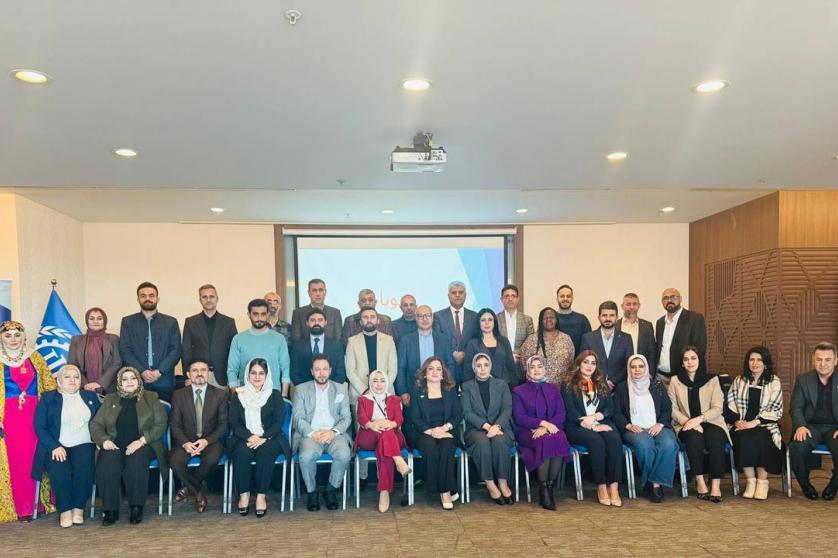
From 24 to 27 November 2025, the International Labour Organization (ILO) conducted an advanced training program titled “How to Support Employers in Iraq.” The program gathered experts from university career development and entrepreneurship centers, labor and social affairs institutions, vocational training departments, and chambers of commerce from Erbil, Sulaimani, Duhok, Halabja, and Nineveh.
This training served as a continuation of the earlier Specialized Training Program for Employment and Professional Development Consultants “How to Support Job Seekers” which took place from 4 to 6 November 2025 in Erbil, creating a comprehensive dual-track capacity-building initiative.
The objective of the November training was to enhance collaboration mechanisms between public and private employment centers and employers at both national and international levels. Key themes included improving target group segmentation, leveraging digital tools strategically, and applying early skills management to strengthen workforce development.
Representing Salahaddin University, Ms. Niyaz Najm Salih, Coordinator of the Center and Lecturer in the College of Engineering, and Ms. Alaa Salah Asad, Professional Expert at the Center and Lecturer in the College of Administration and Economics, actively contributed throughout the program.
At the request of the ILO, and based on collective feedback from all participants, Ms. Niyaz and Mr. Abdullah Baytash from Akre University for Applied Sciences jointly compiled, categorized, and analyzed key challenges and proposed solutions for building stronger, sustainable relationships between employment centers and employers. Their findings were presented on the second and third days of the program and were adopted as a practical roadmap for future collaboration among all participating institutions.
The program concluded with the distribution of participation certificates, marking another milestone in strengthening the ecosystem that connects universities, employers, and job development centers across the region.