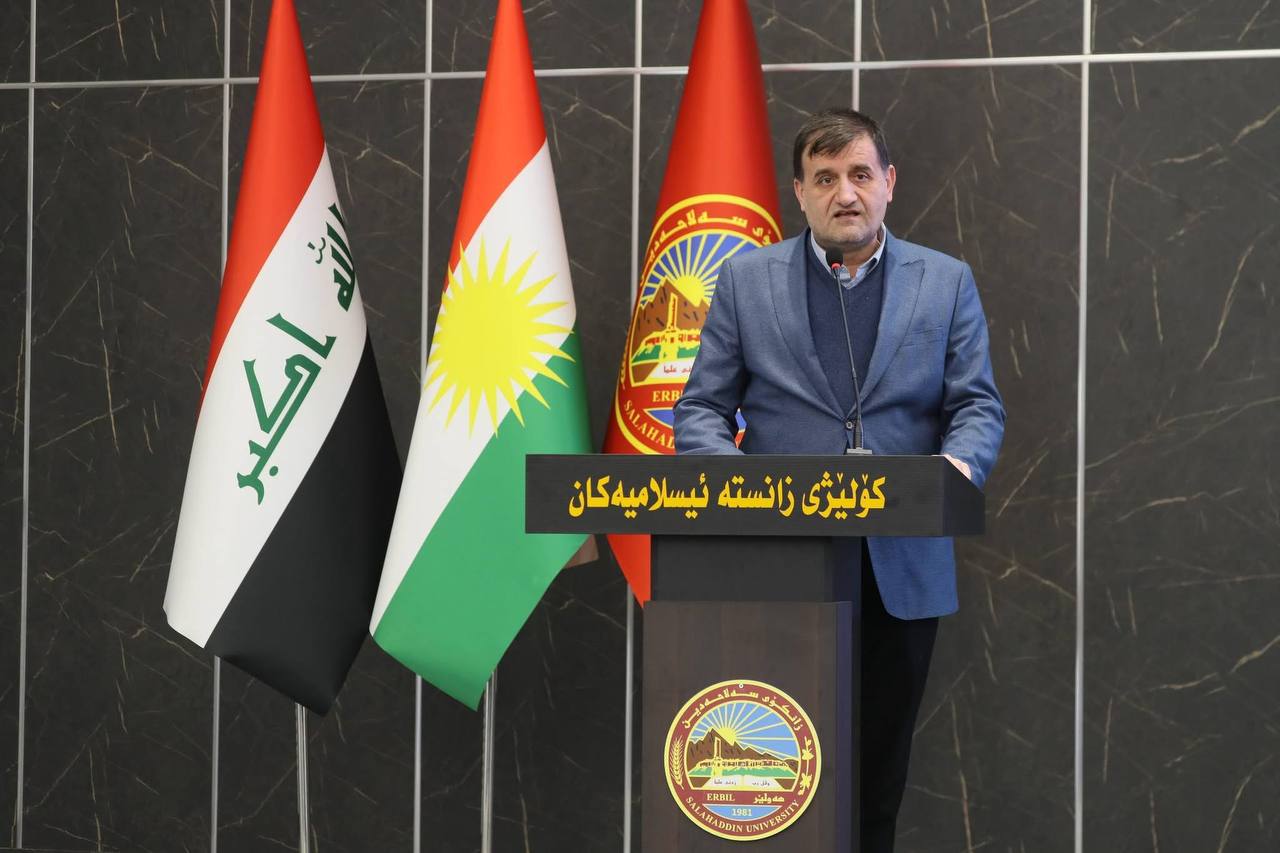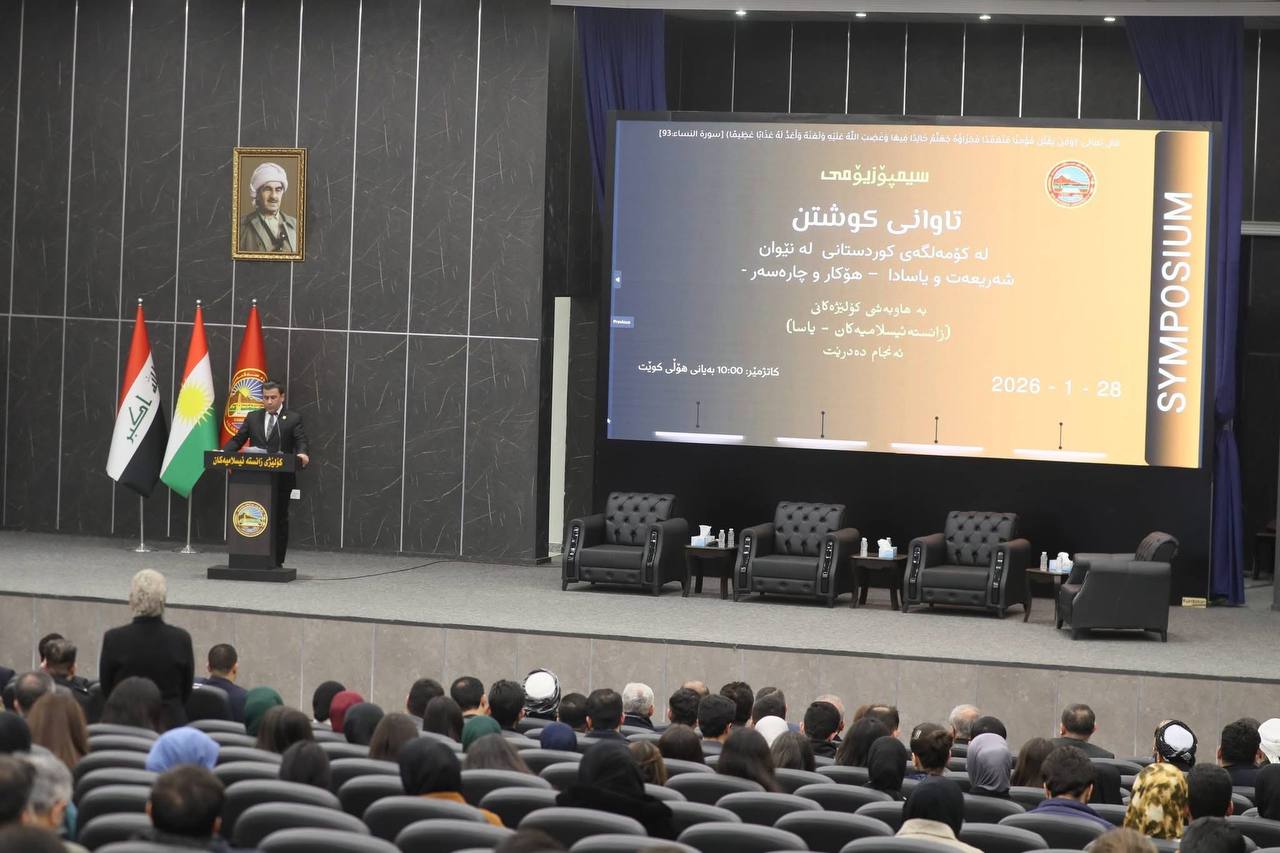
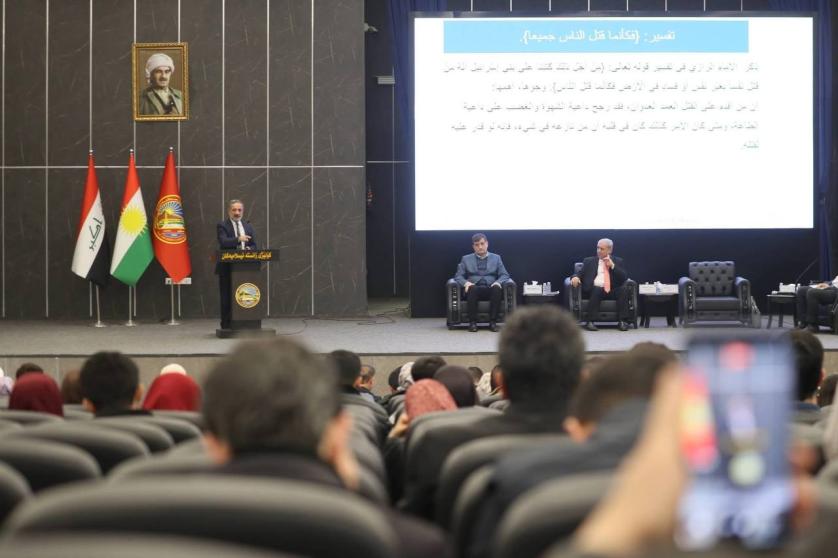
On 28 January 2026, the College of Islamic Sciences, in collaboration with the College of Law, organised a symposium entitled The Crime of Murder in Kurdish Society: Between Sharia and Law, Causes and Solutions.
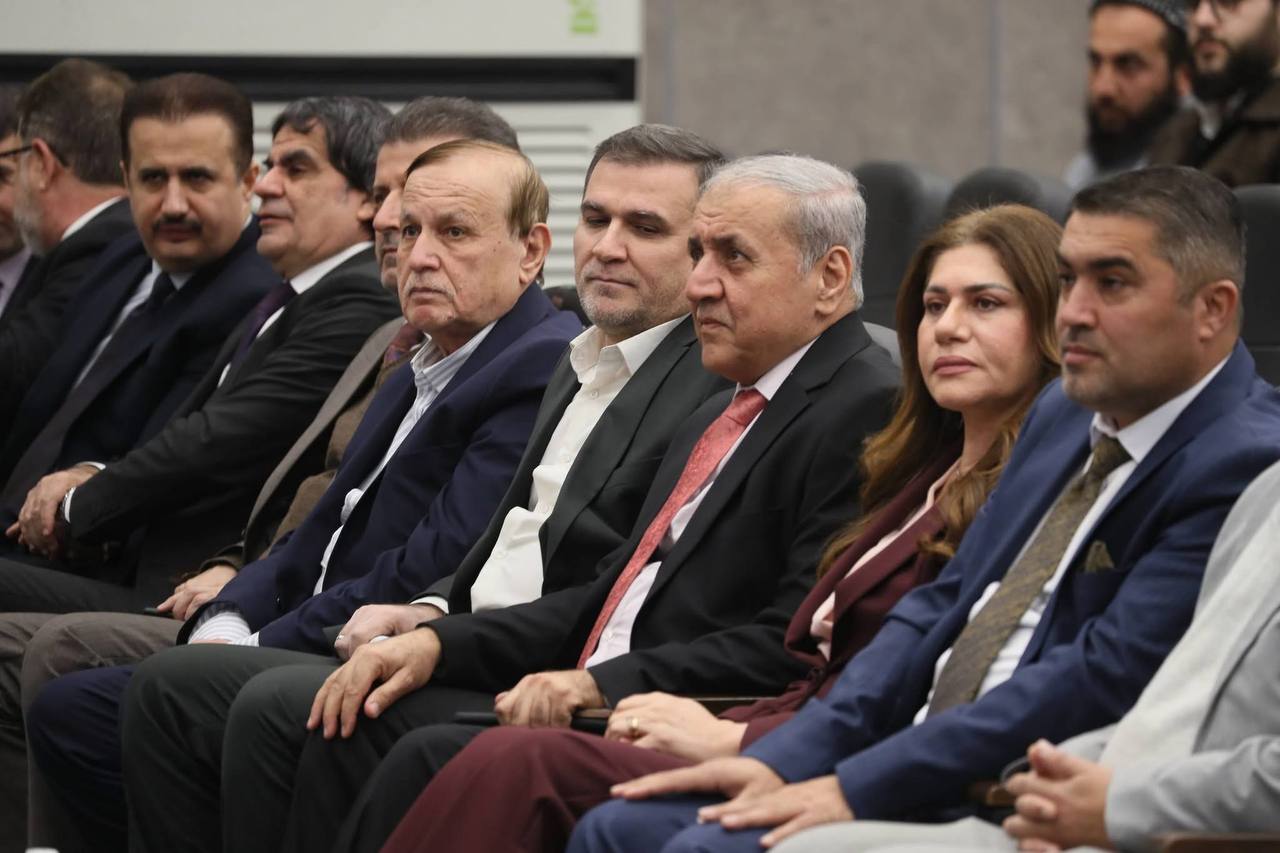
The event took place in the presence of Omed Khoshnaw, Governor of Erbil; Prof Dr Jamil Ali Surchi, Dean of the College of Islamic Sciences; and Prof Dr Bakhtiar Saber Bayiz, Dean of the College of Law, alongside academic staff, employees and students. The symposium brought together specialists to examine the phenomenon from religious, legal, social and psychological perspectives.
The symposium featured several seminars delivered within two main panels.
First panel: The crime of murder and its causes
Panel Chair: Prof Dr Sherzad Aziz Suleiman
Prof Dr Ibrahim Ahmed Suleiman addressed the most prominent causes of murder in Kurdish society.
Judge Abdulbasit Farhadi discussed the drivers of murder and mechanisms for confronting the crime, drawing on the experience of Kurdistan Region courts.
Asst Prof Sadiq Mohammed Hamasharif examined the social and psychological dimensions of murder, providing an analytical reading of the situation in the Kurdistan Region.
Following the conclusion of the first panel, the Dean of the College of Law presented certificates of appreciation to the panel chair and panellists.
Second panel: The crime of murder, self-defence and solutions
Panel Chair: Prof Dr Mohammed Sabah
Prof Dr Ouzdin Hussein Rahman outlined the criminal legal framework for addressing murder in the Kurdistan Region.
Prof Dr Hassan Pshdari explored approaches to dealing with the phenomenon of murder in light of the texts and objectives of Sharia.
Prof Dr Heman Mirani, Director General of the Ministry of Interior Diwan, reviewed the efforts and measures adopted by the Kurdistan Regional Government to confront murder.
At the end of the panels, participants’ questions and comments were received and addressed by the panellists. Subsequently, the Dean of the College of Islamic Sciences awarded certificates of appreciation to the chair and panellists of the second panel.
The symposium concluded with the reading of the final recommendations by Prof Dr Rizgar Mohammed Qadir, Chair of the Scientific Committee of the symposium.