

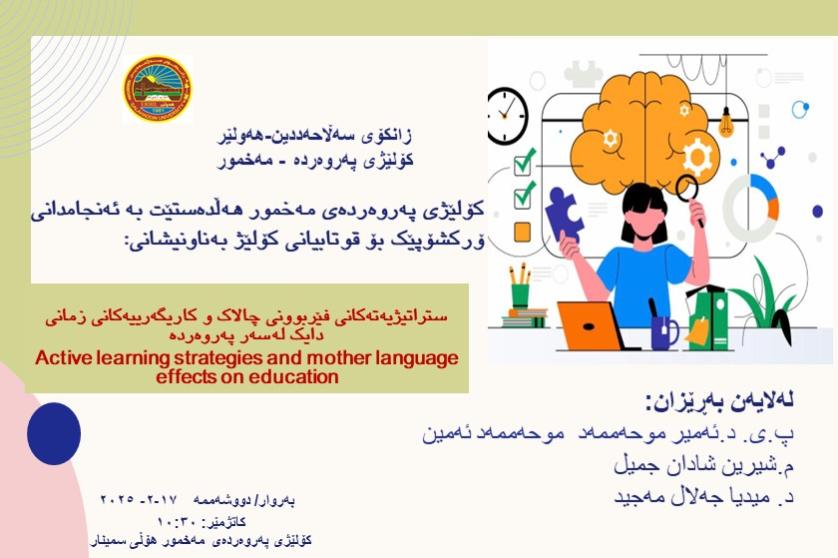
كۆلێژى پەروەردەى مەخمور هەڵدەستێت بە ئەنجامدانى ۆركشۆپێك بەناونيشانى: ستراتيژيەتەكانى فێربوونى چالاك و كاريگەرييەكانى زمانى دايك لەسەر پەروەردە
لەلايەن بەڕێزان:
پ.ى. د.ئەمير موحەممەد موحەممەد ئەمين
٢- د. ميديا جەلال مەجيد
٣-م. شيرين شادان جميل
بەروار/ ١٧/٢/٢٠٢٥
دووشەمە
شوێن/ هۆڵى سمينار
م.شيرين شادان
Active Learning Strategies
Active learning methods ask students to engage in their learning by thinking, discussing, investigating, and creating. In class, students practice skills, solve problems, struggle with complex questions, make decisions, propose solutions, and explain ideas in their own words through writing and discussion. Timely feedback, from either the instructor or fellow students, is critical to this learning process. Education research shows that incorporating active learning strategies into university courses significantly enhances student learning experiences. Benefits of Active Learning
Opportunities to process course material through thinking, writing, talking, and problem solving give students multiple avenues for learning. Applying new knowledge helps students encode information, concepts, and skills in their memories by connecting it with prior information, organizing knowledge, and strengthening neural pathways.
پ.ى.د. ئەمير موحوممەد موحەممەد ئەمين
Kurdish language, as mother tongue
Mother tongue in a monolingual society means the language of the nation, the first language, the mother tongue and the language of the country, but each of these languages has its own definition in a multilingual society. Language is the identity and existence of every individual and nation, but the invaders want to gradually and slowly destroy the language of these nations, erase their identity and history and impose their own language on these languages.
د. ميديا جەلال مەجيد
Language reflects the level of consciousness and culture. We need to know how to be conscious and careful in the use of language so as not to have a negative impact on the education of students, because the ignorance of individuals in society in recording harsh words and taboos has a negative impact on the education of future generations. Students in the modern world are constantly exposed to taboo language and subjects. Such as: swearing, blasphemy, divorce, depression, diseases such as cancer and AIDS, torture, sex, death, alcohol, nudity, suicide, terrorism, abortion, polygamy, depression, rape.